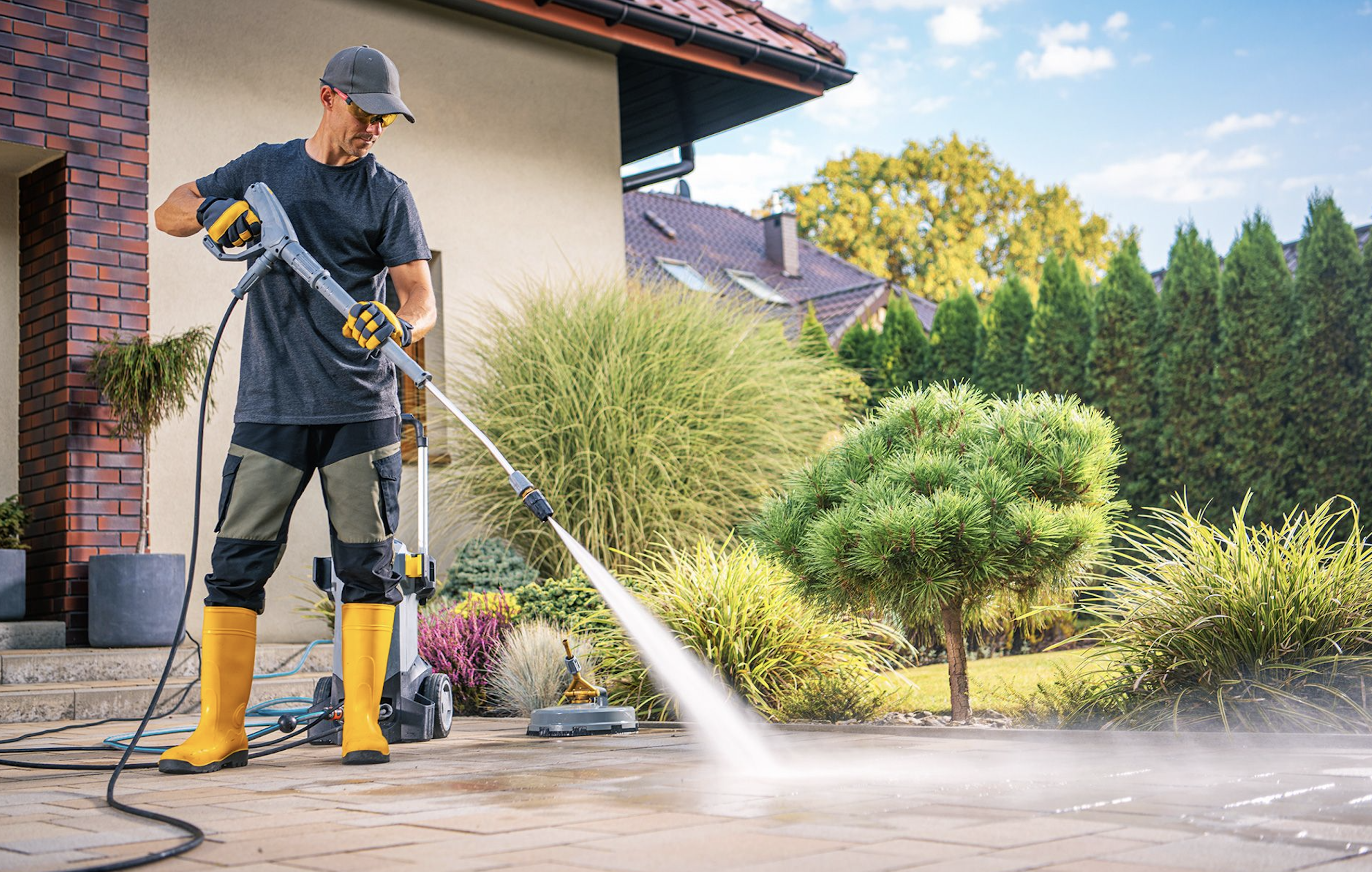
Pressure washers are powerful, versatile tools that can make home cleaning faster and easier — when used safely and correctly. Misuse, though, can damage siding, chip paint, crack pavers, and even cause injury. This guide walks through the six things every homeowner should know before pulling the trigger.
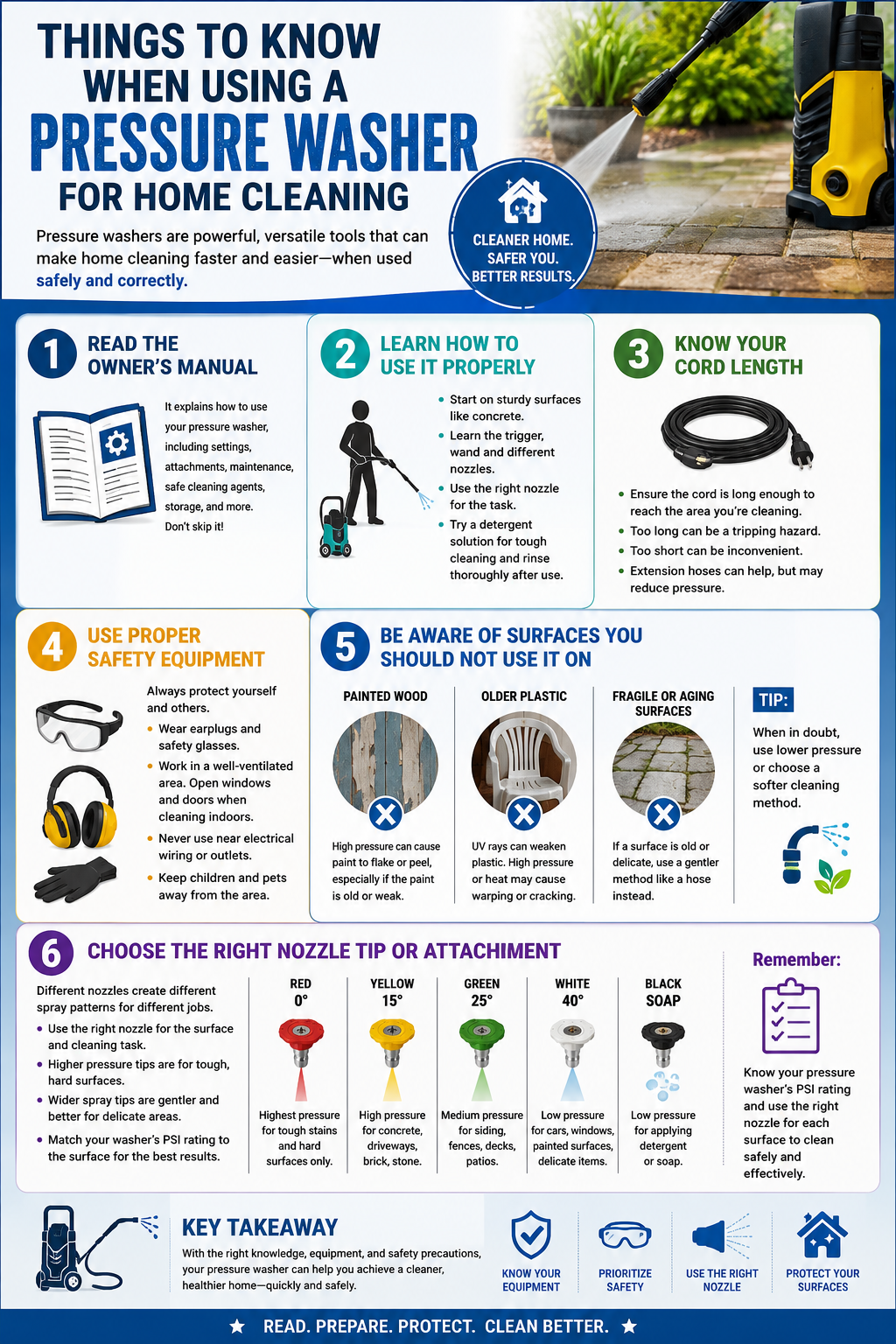
Save the infographic below for quick reference, then read on for the details behind each step — including the color-coded nozzle system pros use to match spray pattern to surface.
1. Read the Owner's Manual
It explains how to use your pressure washer, including settings, attachments, maintenance, safe cleaning agents, storage, and more. Don't skip it. Every model has its own PSI rating, hose connections, detergent compatibility, and shut-off procedure — and 90% of pressure washer damage starts with skipping the manual.
2. Learn How to Use It Properly
- Start on sturdy surfaces like concrete.
- Learn the trigger, wand, and different nozzles.
- Use the right nozzle for the task.
- Try a detergent solution for tough cleaning and rinse thoroughly after use.
Spend the first ten minutes spraying a non-precious surface — bare concrete is ideal — to feel how the trigger, wand, and nozzles behave. The recoil at high pressure is real, and it's not the moment to discover it while pointed at your siding.
3. Know Your Cord Length
- Ensure the cord is long enough to reach the area you're cleaning.
- Too long can be a tripping hazard.
- Too short can be inconvenient.
- Extension hoses can help, but may reduce pressure.
4. Use Proper Safety Equipment
Always protect yourself and others. A pressure washer can cut skin at close range and throw debris at high velocity.
- Wear earplugs and safety glasses.
- Work in a well-ventilated area. Open windows and doors when cleaning indoors.
- Never use near electrical wiring or outlets.
- Keep children and pets away from the area.
5. Be Aware of Surfaces You Shouldn't Pressure Wash
Pressure washers are not universal. Some surfaces will be damaged the moment you pull the trigger.
- Painted wood — High pressure can cause paint to flake or peel, especially if the paint is old or weak.
- Older plastic — UV rays can weaken plastic. High pressure or heat may cause warping or cracking.
- Fragile or aging surfaces — If a surface is old or delicate, use a gentler method like a hose instead.
Tip: When in doubt, use lower pressure or choose a softer cleaning method.
6. Choose the Right Nozzle Tip — The Color Code
Different nozzles create different spray patterns for different jobs. Higher pressure tips are for tough, hard surfaces. Wider spray tips are gentler and better for delicate areas. Match your washer's PSI rating to the surface for the best results.
- Red · 0° — Highest pressure. Tough stains and hard surfaces only.
- Yellow · 15° — High pressure. Concrete, driveways, brick, stone.
- Green · 25° — Medium pressure. Siding, fences, decks, patios.
- White · 40° — Low pressure. Cars, windows, painted surfaces, delicate items.
- Black · Soap — Low pressure. Applying detergent or soap.
Remember: know your pressure washer's PSI rating and use the right nozzle for each surface to clean safely and effectively. The red 0° tip is the one most homeowners reach for first — and most often regret. Start wider and step down.
Key Takeaway
With the right knowledge, equipment, and safety precautions, your pressure washer can help you achieve a cleaner, healthier home — quickly and safely. Know your equipment. Prioritize safety. Use the right nozzle. Protect your surfaces.
When to Call a Commercial Pressure Washing Pro
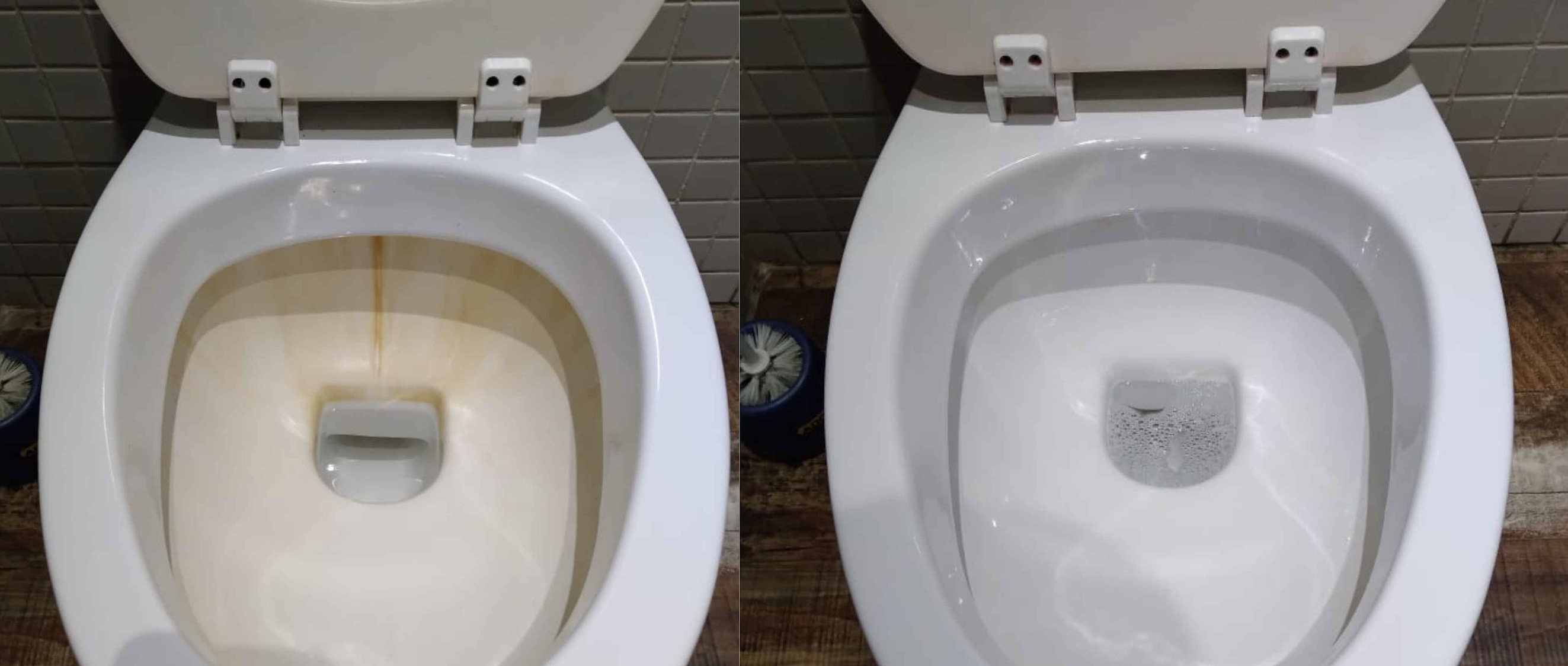
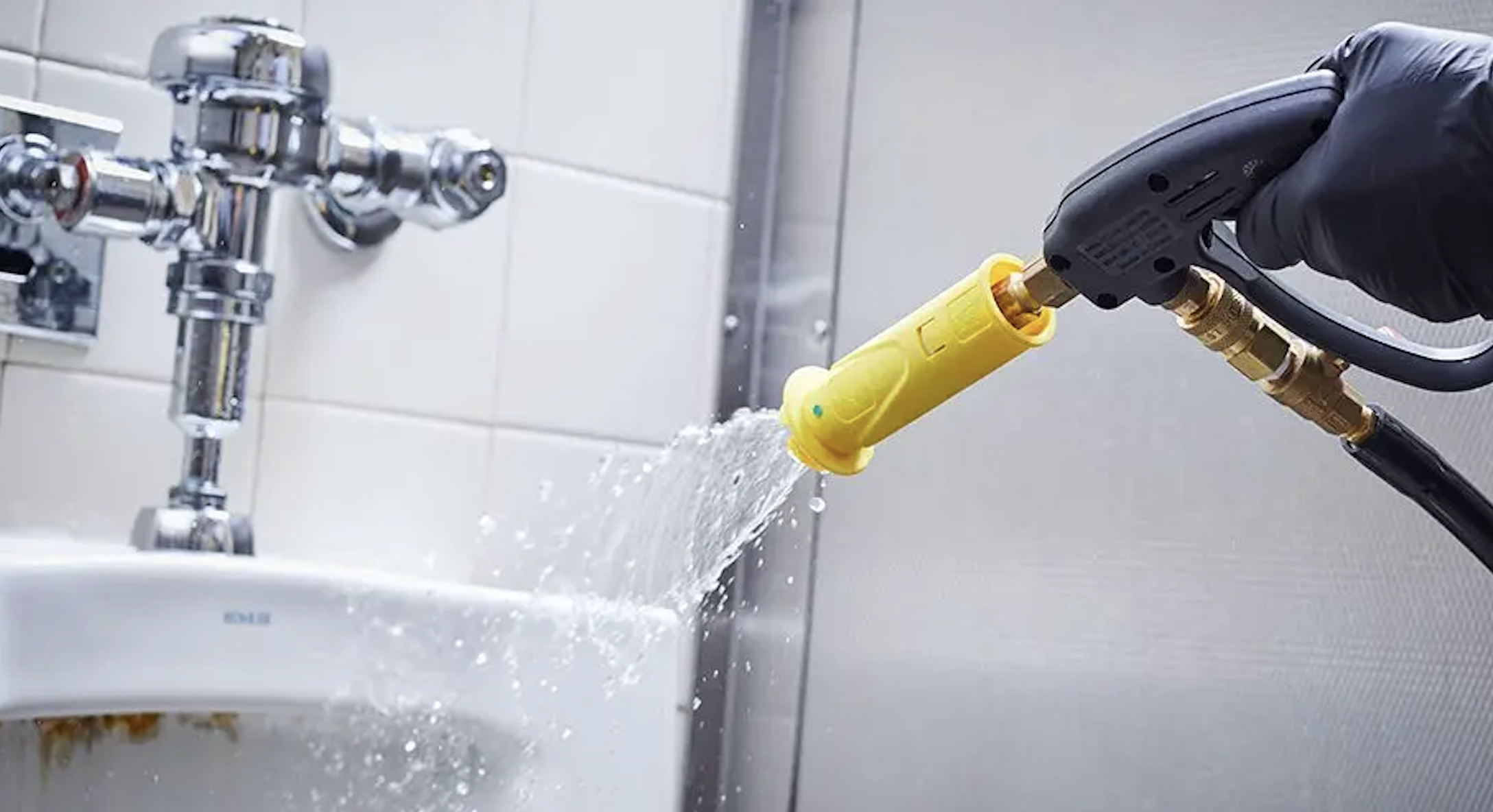
Homeowner pressure washers are great for patios, driveways, fences, and cars. But once you're dealing with heavily stained commercial concrete, restroom floors with embedded grime, urine salts in grout, or large-scale property exteriors — DIY equipment simply doesn't have the PSI, GPM flow rate, or trained operators to do the job safely.
Deep Clean provides commercial pressure washing, deep-foam restroom sanitation, grout restoration, and odor elimination across Wilmington, Wrightsville Beach, Carolina Beach, and the surrounding Cape Fear region. If your facility needs more than a homeowner-grade tool can deliver, we're built for that.